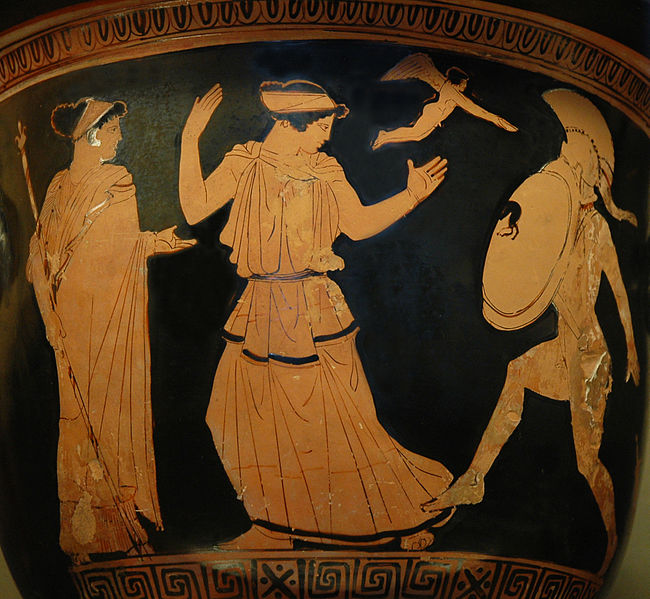
In the dead of night she buried her bundle. Silently past the guards, past her captor, she crouched. In her freshly dug hole in the garden she dropped her sigil, carved with the invocation of Hera and anointed in fresh pig's blood. To the stars and the night and the gods she chanted her spell. She cursed the one who had kidnapped her and his city, she cursed the people within and bound them to ten years of misery and suffering for her insult. Paris would pay, and his precious city of Troy would fall with him, for although he had captured the most beautiful woman in all of Greece, he hadn't known that Helen of Mycenae was also the most powerful witch in all the land. And Hera, the mother goddess to the Greeks heard her righteous curse, and she promised her a return to her home, and to her husband, and she set the Greeks on the warpath to Troy. Athena, the great war goddess, rallied by Hera she led the Greeks in fury to Troy, sacking and razing and kidnapping along the way. They rode in glorious battle and when they came to Troy they would destroy it, as they had destroyed all else in their path.
***
Her temple sacked and her city burning, she prayed to her god Apollo for salvation. As her mother burned and her father lay bruised and beaten she prayed for reprieve, and as she was carried away by a great warrior wielding a spear, Agamemnon his soldiers called him, she prayed for revenge. She prayed Apollo might bless her with the power to curse the Greeks who had razed her home. As they carried her away in binds she swore that she would have her revenge upon the armies of Greece and as she swore Apollo heard her, and turned his gaze upon her. As she sat in binds, waiting while the warriors of Greece argued her fate, he blessed her, and she slipped from her ties and stole silently away, but although she was free, she refused to forget. For their crimes she cast upon them a dreaded curse. And all her sisters wronged, taken also in chains, heard her curse and cast their own, and Apollo heard them too, and in his prophecy he promised that the Greeks would lament their crimes. And as he spoke the words they were so, that the Greeks must lose their most precious warriors, that those who did not fall in battle would face their greatest woe upon their return home. None may leave unscathed save Helen and her husband. Granted protection by Hera, all the curses of women could not harm them, nor could they reverse the fate that was of Troy to fall, but little interest did they have in the fate of Troy. To make the Greeks suffer would be vengeance enough.
***
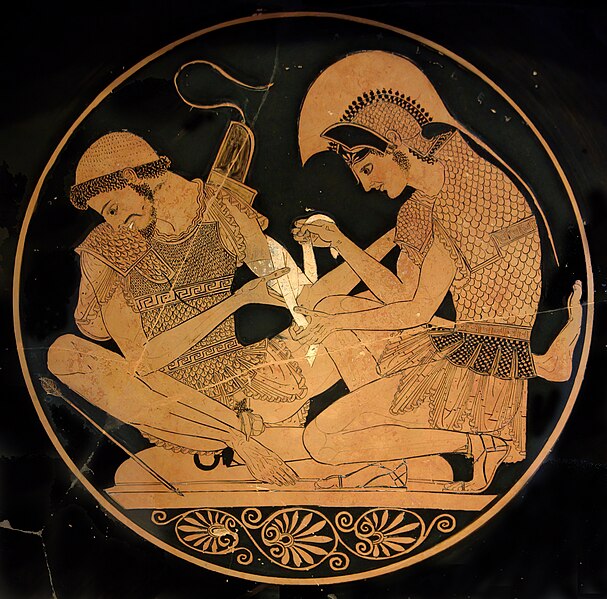
And the god of pestilence did sow like disease discord between the Greek warriors of Greece, and as the great Achilles departed, insulted by the Greek general Agamemnon, the tide turned against the armies of Menelaus. As their armies fell they retreated, but only briefly, and they begged Achilles' return. But Achilles' grudge ran deep, biting like flies they nagged him and he could not return, and in his place came the great Patroclus. Most loved of Achilles, he took up his arms and rushed against the armies of Troy and he did slay a great many of their warriors but the Trojan hero Hector saw through his disguise and, emboldened by his discovery slew him. And the tide turned once again against the Greeks as the competing curses of every wronged woman fought and mingled, bringing blood and strife to the great war. When Achilles heard of his fallen Patroclus he rallied himself, burning away his grudge in a fever and setting upon the Trojans like a wolf. Round and round the city he pursued the villian Hector until Athena, bade by Helen and her patron Hera, tricked him and brought the two face to face. And Achilles, greatest warrior of Greece killed the hero Hector, but in doing so cemented his own untimely death as the curse of those he wronged sealed his death with the fates.
***
For ten long years the armies of Menelaus laid siege to the city of Troy and Helen, still trapped inside, had her revenge for all those inside suffered until, at last, they succumbed to the treachery of the Greeks. Believing they had won, they accepted the parting gift of Greece, the terrible Trojan Horse, holding a great number of the armies of Agamemnon, and in the night they stole from the horse and opened the city gates and set upon it, burning all in their path, taking what they could and stealing back their long sought after Helen. They killed the kidnapper Paris and set fire to the city, and, in keeping with the prayers of Helen and blessing of Hera, they returned her safe to her home and her husband. But although the war was over, the curse of Apollo was far from done. Achilles had succumbed to the arrows of Paris before the war was finished and he rested in the afterlife with Patroclus. Agamemnon was soon to join them as he returned home to his city and his wife Clytemnestra with yet another captive, another devotee of Apollo the priestess Cassandra. Betrayed and killed by his wife and her new lover he would soon find himself among the dead as well. Only Odysseus, beloved of Athena, would not meet his fate so soon, but would be carried about, on a ten year long voyage home, seeing not his family or his city until then and only after great hardship. Only Helen and Menelaus led a blessed life after the war. At great cost she had returned to her home and, as bade, Troy and Paris had fallen. With so many dead, the age of Heros of Greece ended and life carried on, as it always had.
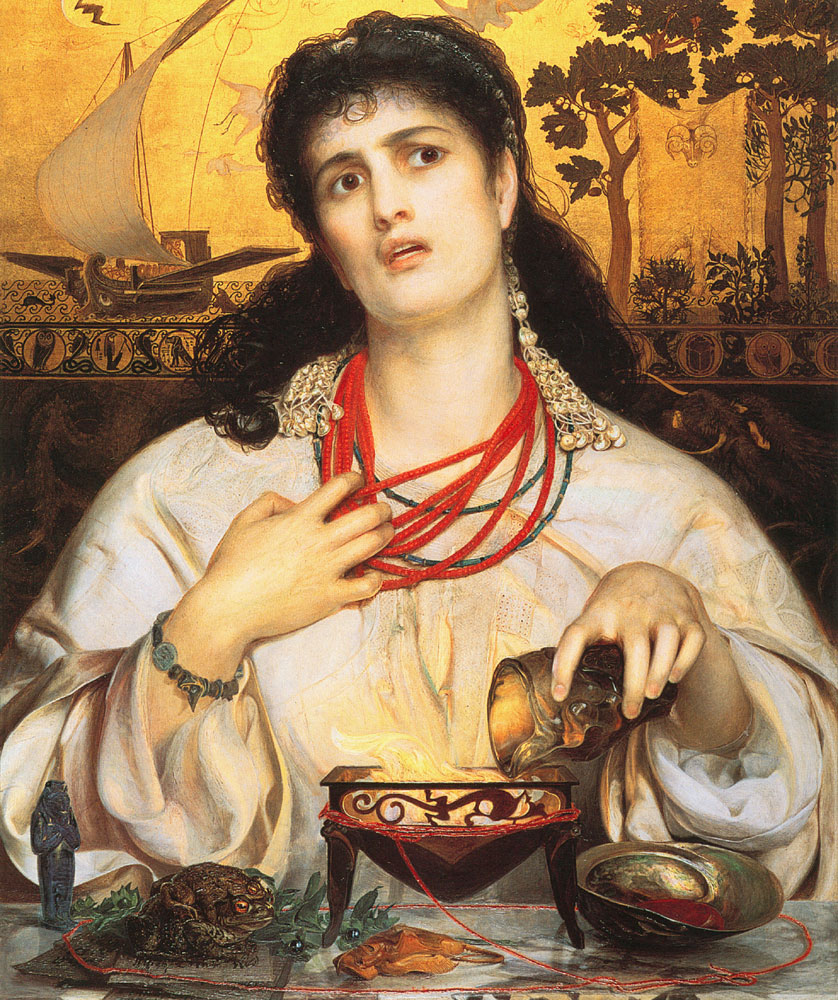
(image of Medea, ancient Greek witch, performing witchcraft, Frederick Sandys, 1866)
Author's note: This is a long one but then again the Iliad is long. I decided to write this from the perspective of the various women who were wronged throughout the myth of the Trojan War. I believe Helen was not actually that much of a victim in the original myth and went willingly with Paris but I needed a motivation for her curses. The women here are shown as the actual catalysts behind the action in the Trojan war, moving the men about more like chess pieces rather than actually fighting. I would have played out the angle of the chess game more but I only had so much room to write. I had fun giving the women of Greece more agency and importance in the story than the original myth which showed them more as toys for the men to fight over.
Story Source: The Iliad, retold by Alfred J. Church